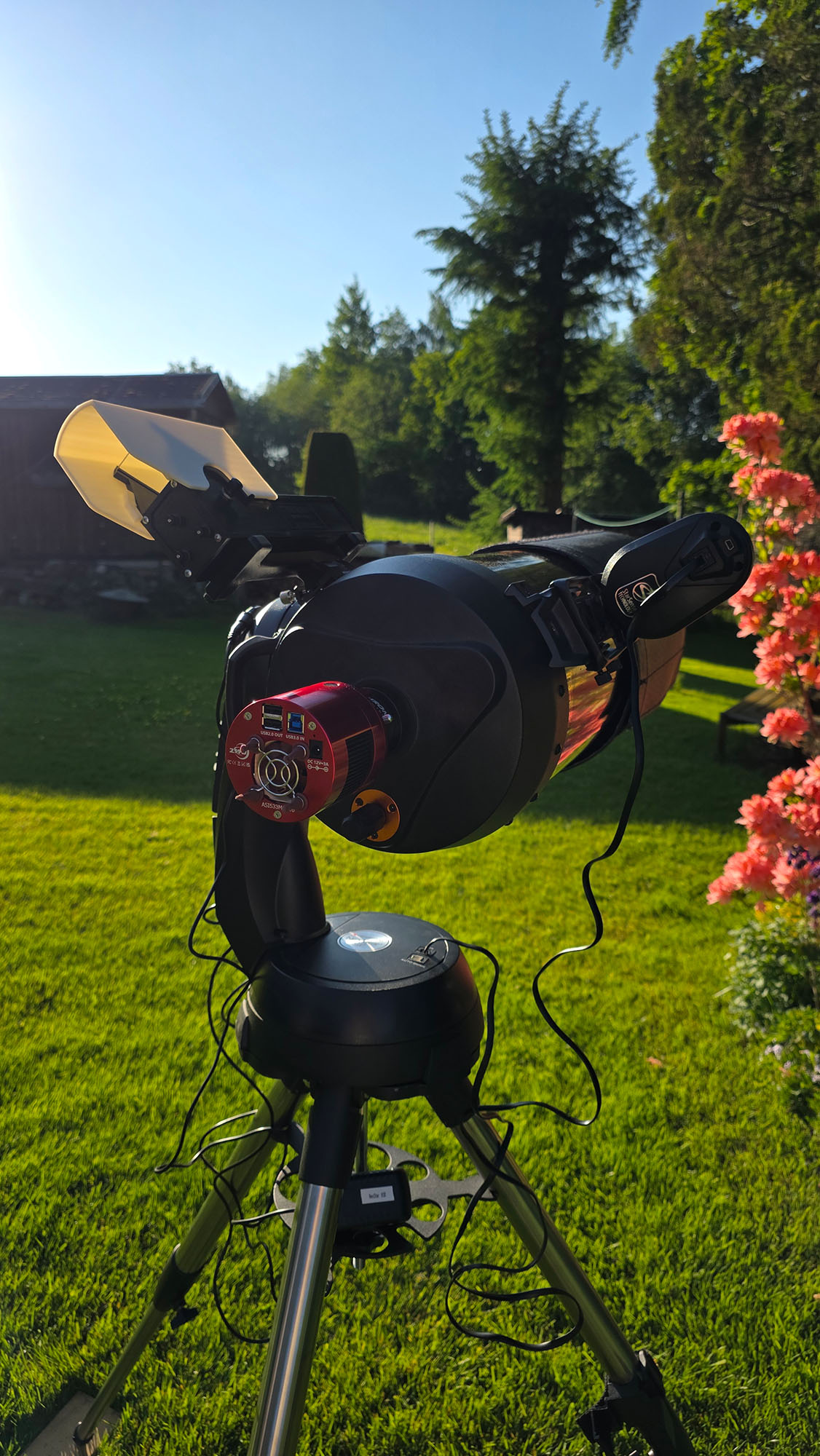
Test Setup: Celestron C8 with ASI533, Telrad and StarSense
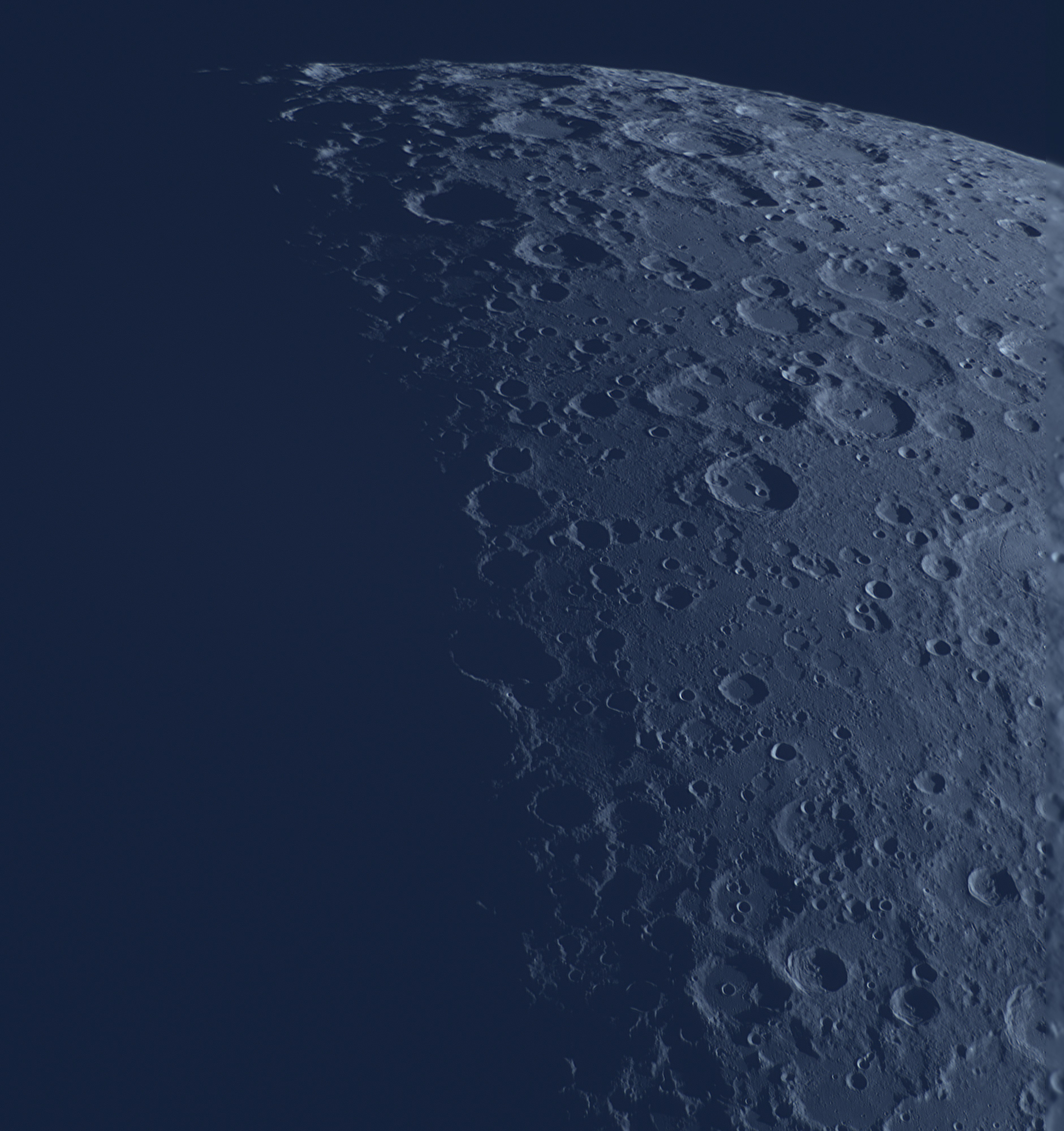
The Sun had not quite set yet. Taken with a 2.25x Barlow.
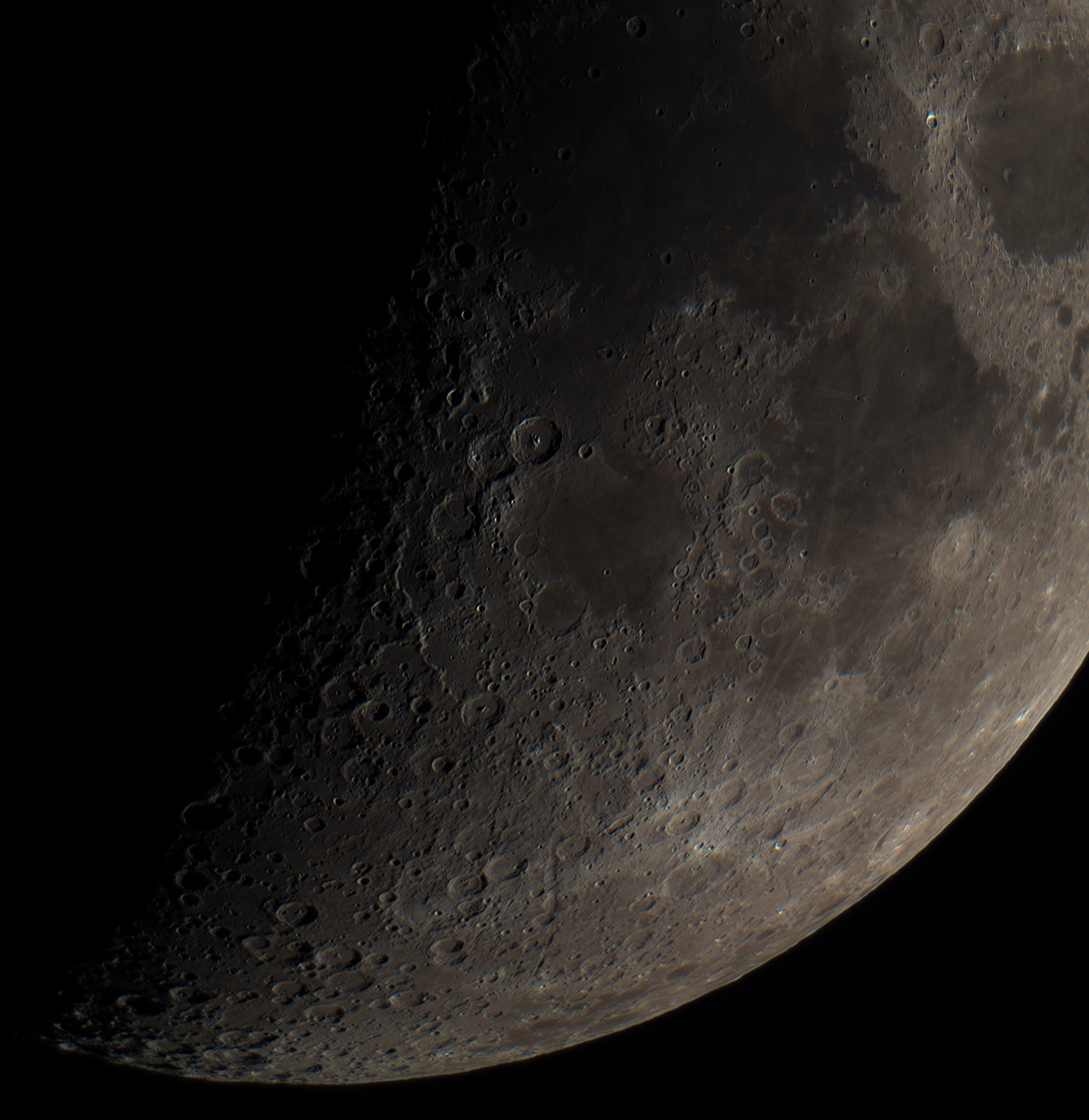
By this point it was already a bit later. Taken without a Barlow.
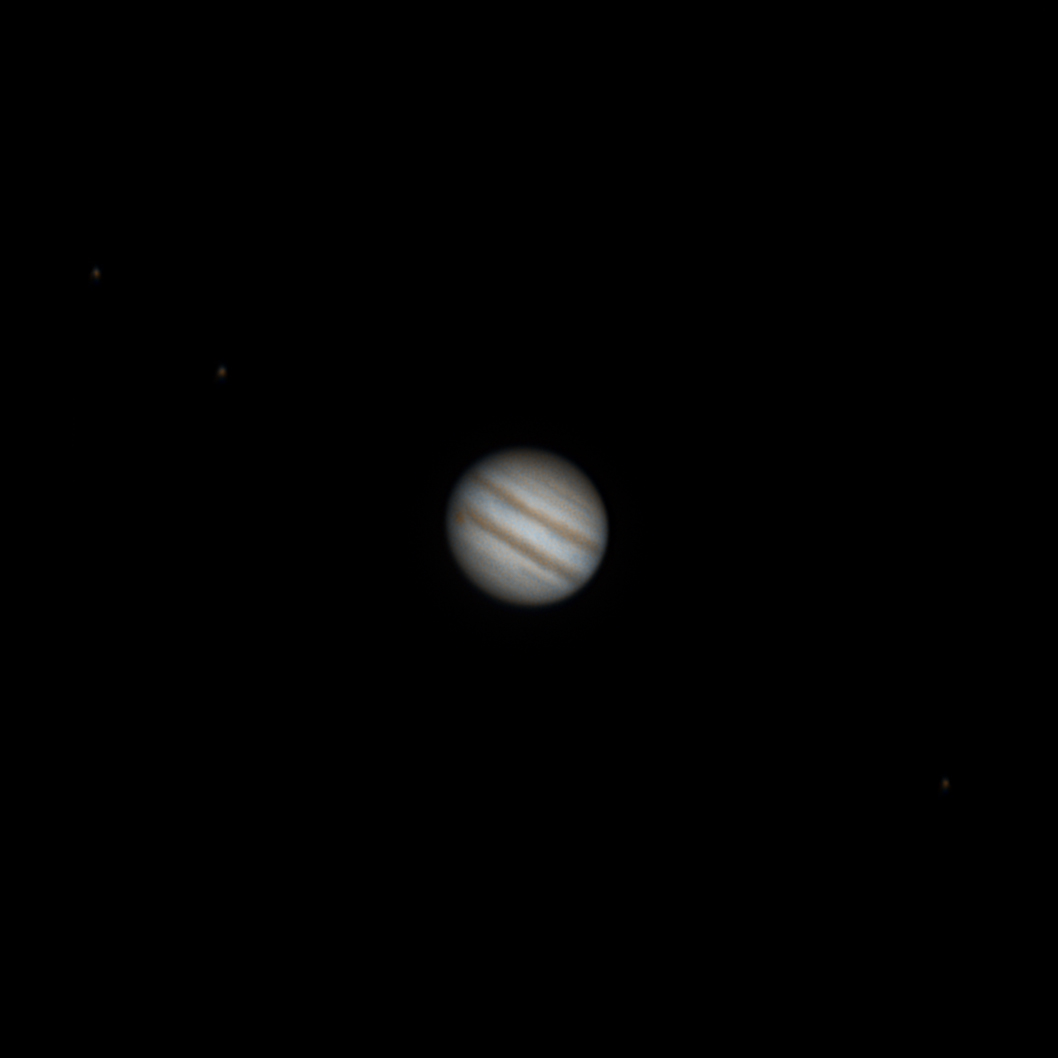
Jupiter with Europa, Ganymede and Io
After the successful experiments with the ASI533 camera on the Acuter 40/400 for solar observing, and after seeing another hobby astronomer use his C8 with a planetary camera at TUCTag, I had to find out what would happen if I mounted the ASI533 on my own C8. Jupiter was still clearly visible at sunset, and the Moon was waxing as well. So these two objects had to be the first to suffer.
To my surprise, the first images actually worked out – okay, Jupiter maybe more badly than well. The Moon, on the other hand, is quite presentable. The imaging procedure was basically the same as with the Acuter: lucky imaging by recording a video with SharpCap. Since it was still too bright to calibrate the C8 on stars or with StarSense, I had to track the objects manually with the hand controller. It should be noted that a C8 on a NexStar mount wobbles like a duck’s assbottom. Add to that the backlash in the gears, which makes counter-corrections fairly difficult. So I only managed a few minutes of lucky-imaging video per celestial object.
The next day, after a bit of research, I found out that Jupiter does not exactly rotate slowly and that the videos should actually be limited to around two minutes, otherwise you have to derotate the data with some effort. So, thanks to my own ignorance and rushed action, I learned something new again :-)