I had wanted to photograph some lost places for quite a while. Castle ruins are particularly suitable for this purpose: they are abandoned, crumbling and overgrown, yet officially considered historic monuments, which means there is usually no need to climb through a conveniently pre-cut hole in a fence. Essentially, they are lost places with better public relations.
So, on 2 October 2025, we drove to Bohemia for no better reason than that it seemed like fun and set out to explore a few of them.
Hasištejn – a remarkably tidy lost place
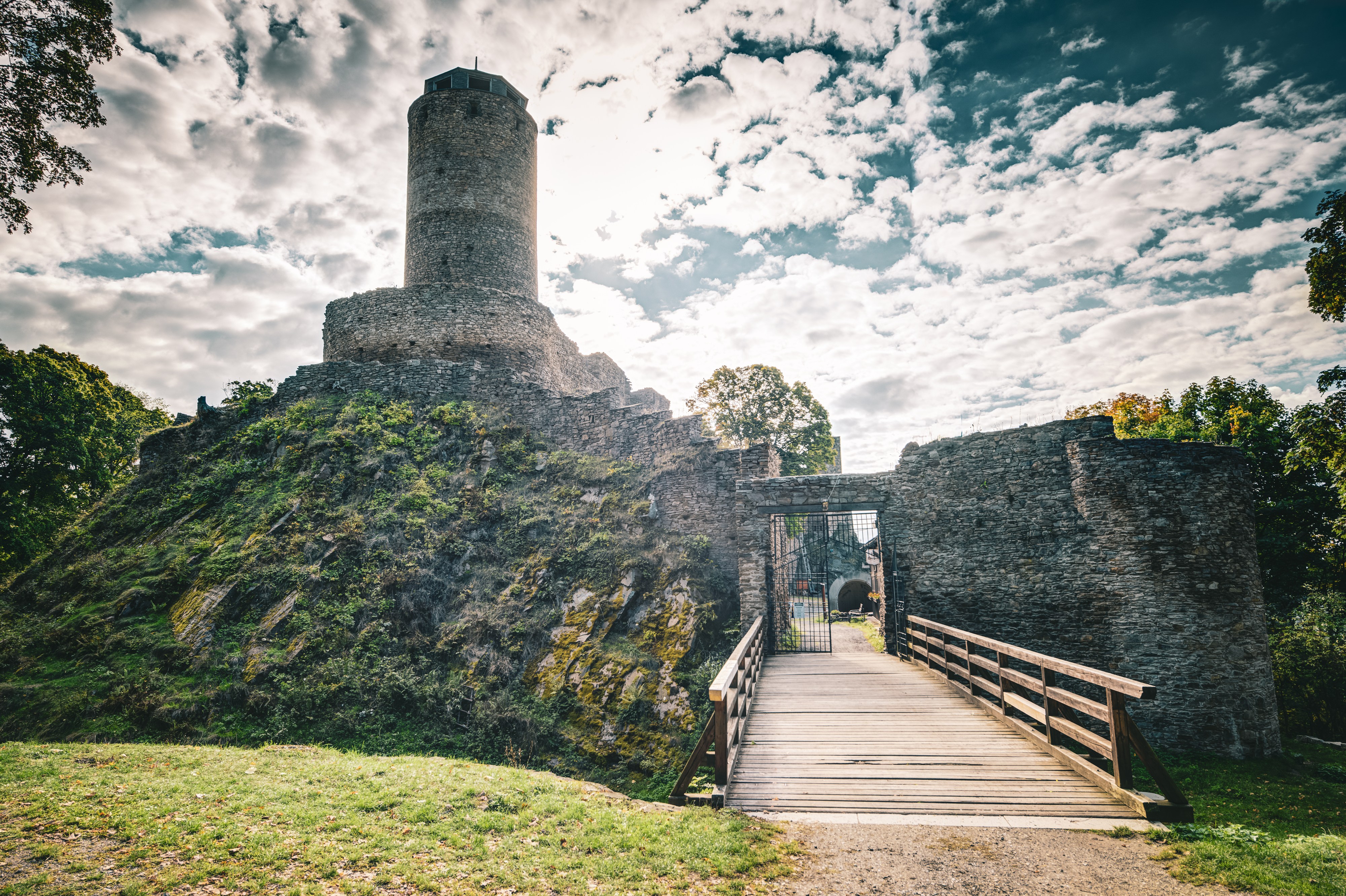
Our first stop was Hasištejn, known in German as Hassenstein. Founded around 1340, the castle stands above a wooded valley near the small village of Místo. With its massive round tower, high walls and wooden bridge, it looks almost exactly like a medieval castle is supposed to look.
For a genuine lost place, however, it was in rather good condition. Apparently, somebody actually takes care of it – so thoroughly, in fact, that it was closed for restoration work that day. All we could do was take a photograph from outside through the gate. It was technically open, but a rather grumpy-looking worker was sitting just behind it.
Our first castle visit therefore ended somewhat sooner than expected.
The following ruins presented us with a different challenge. Medieval castles were generally built on difficult-to-reach hills and only rarely equipped with adequately sized visitor car parks.
No matter where we tried to leave the car, we apparently chose the exact spot that a local farmer and his machinery urgently needed moments later. After several attempts, the experiment of parking anywhere in the Bohemian countryside without inconveniencing someone had to be considered a failure.
Eventually, we found a reasonably acceptable solution and set off towards the second castle.
Egerberk – ancient walls above the Ohře valley
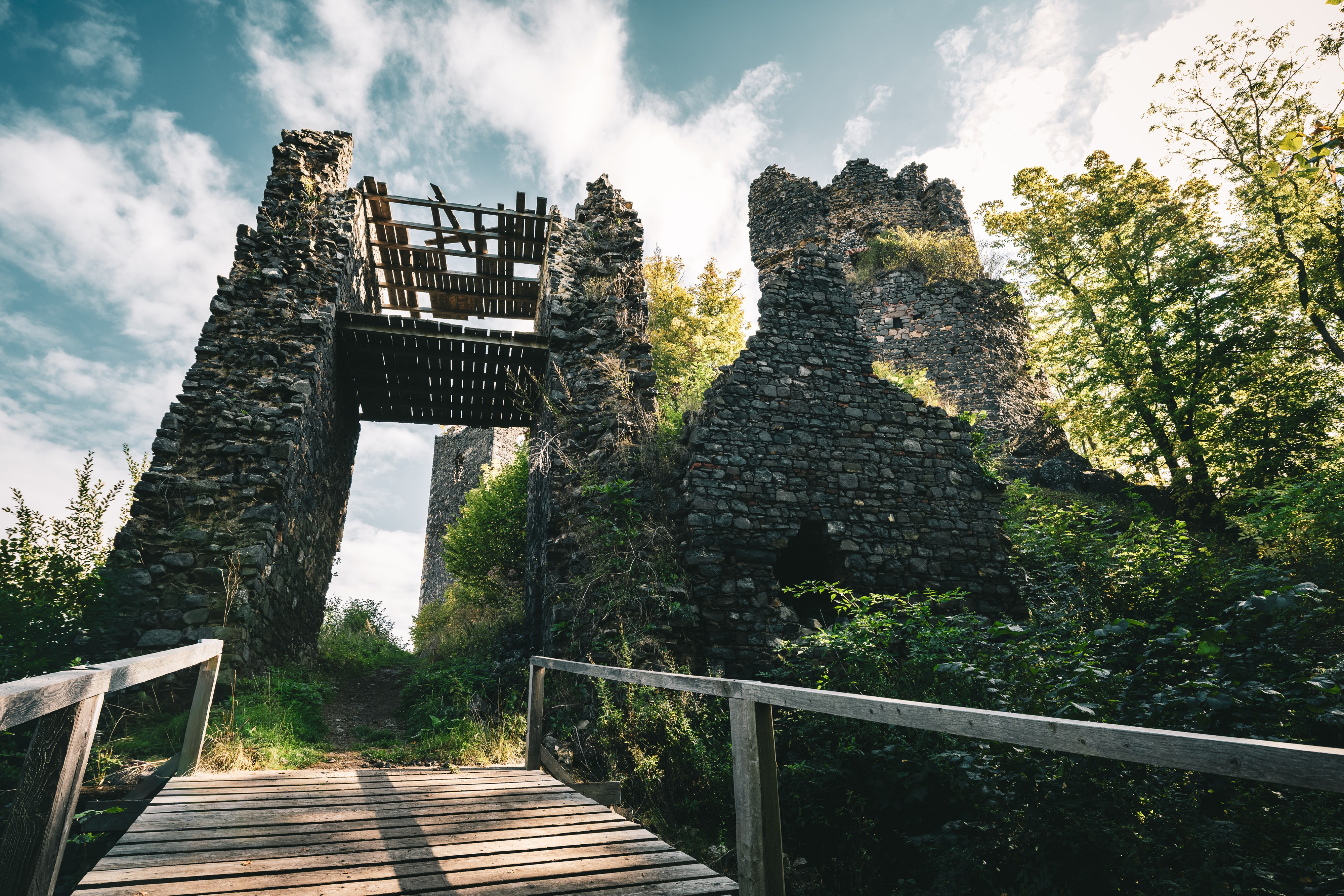
Egerberk, also known as Egerberg or Lestkov, was founded around the turn of the 13th and 14th centuries. The ruins occupy a wooded ridge above the Ohře valley and can only be reached on foot. A wooden footbridge leads through the crumbling gateway and into the extensive castle grounds. The surviving walls still give a good impression of how imposing the stronghold must once have been. At the same time, the ruins offer wide views across the surrounding forests and mountains.
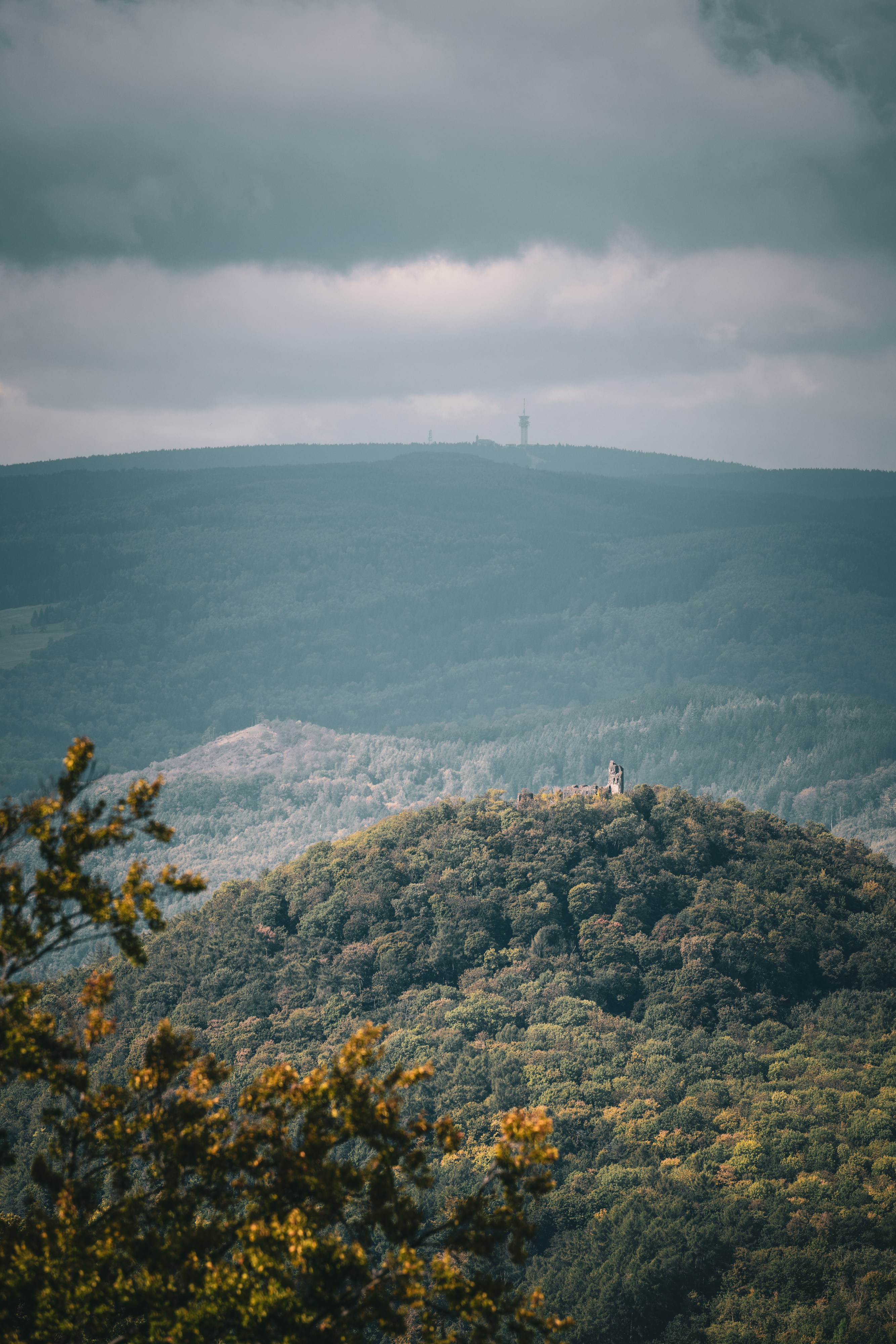
One of my favourite photographs of the day was taken from the castle courtyard with a telephoto lens. On a wooded hill in the distance, the ruins of Šumburk rise above the trees. Far behind them stands Klínovec, or Keilberg, with its distinctive observation tower.
Apart from us, there was nobody at Egerberk. No hiking group, no other visitors and not even anyone waiting to explain that we had parked in completely the wrong place.
The supposed monastery below Šumburk
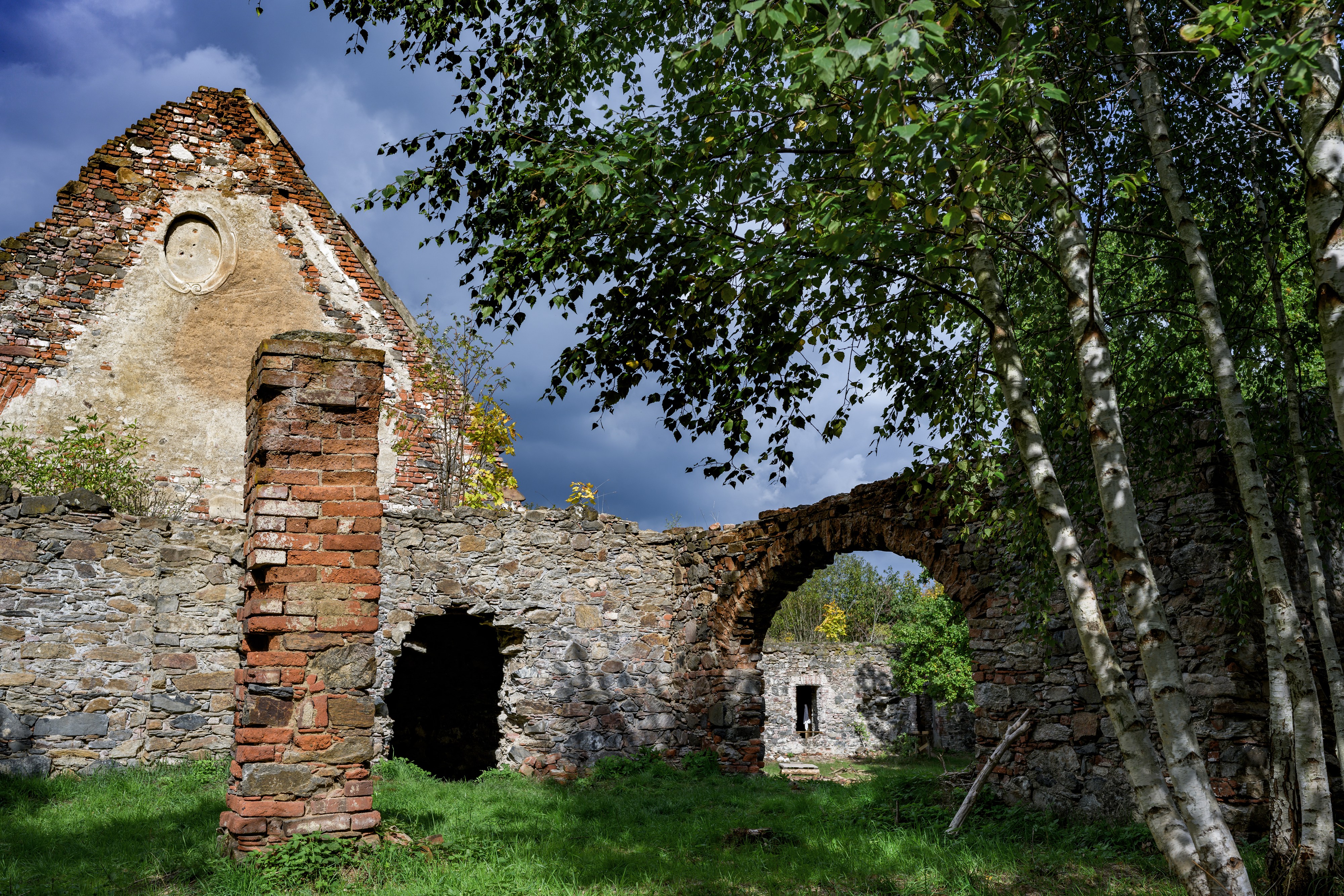
Šumburk was our next destination. The path initially passed old, partly overgrown orchards before entering the forest. Below the actual castle hill, we came across another surprisingly large complex of ruins. At first, we assumed that these were the remains of a monastery. In fact, they belonged to the former Šumná farmstead. First mentioned in 1512, it was later converted into a fortified manor when the medieval castle apparently no longer met the expectations of its residents. It subsequently became a Baroque agricultural estate.
Today, only crumbling walls, arches and individual gables remain. A huge old pedunculate oak dominates the courtyard, its spreading crown towering above the ruins. In 2022, it even reached the final of the Czech Tree of the Year competition.
This was also where we encountered the only other person we saw during the entire tour. While we had spent considerable time wondering where a car could reasonably be left, this solitary gentleman had adopted a considerably more pragmatic approach: he had simply driven his Jeep all the way to the oak.
There, he unfolded a field kitchen large enough to supply a small military unit and proceeded to prepare an impressive steak complete with side dishes. Evidently, there is more than one way to appreciate historic ruins.
Šumburk in the autumn light
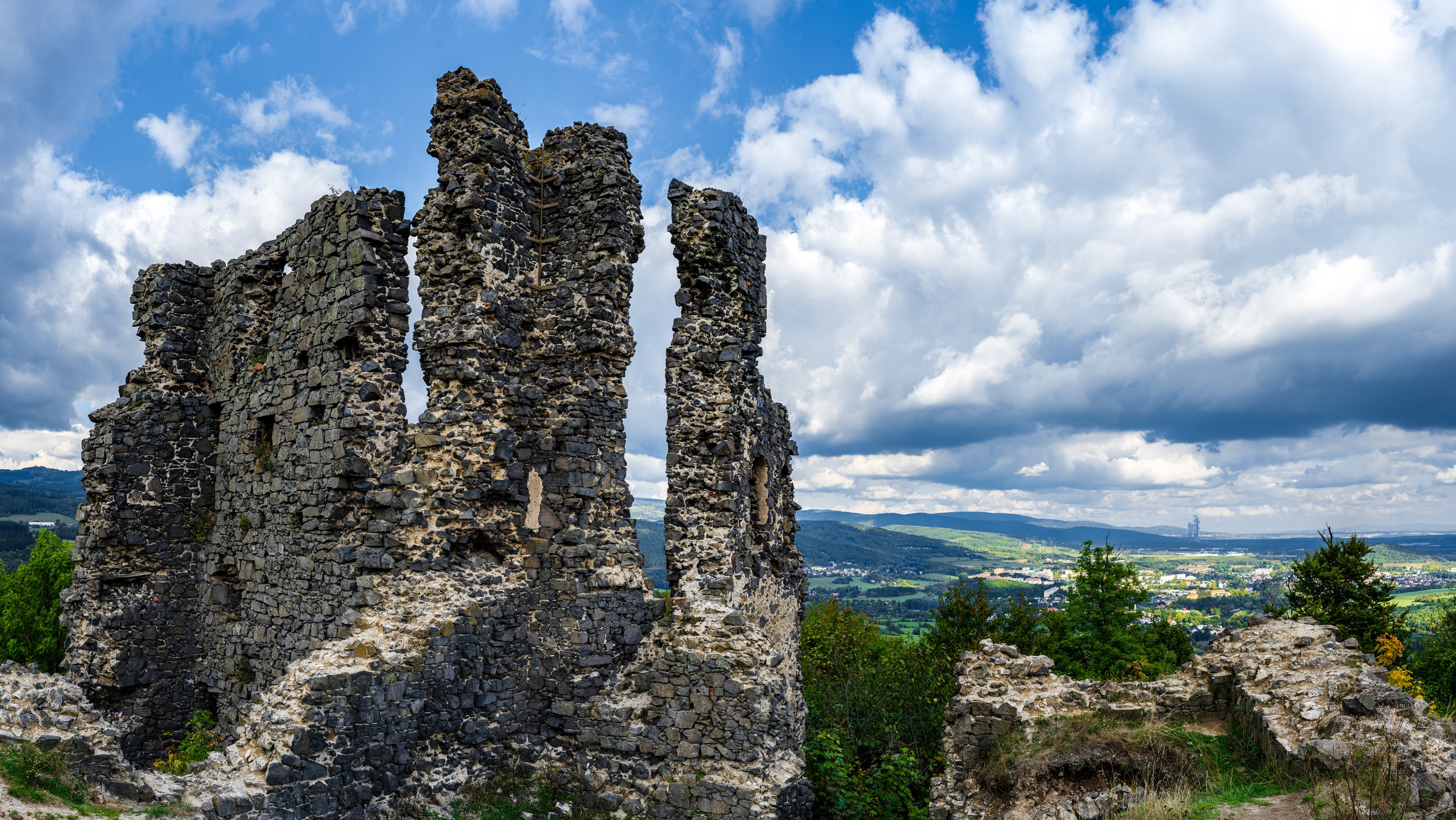
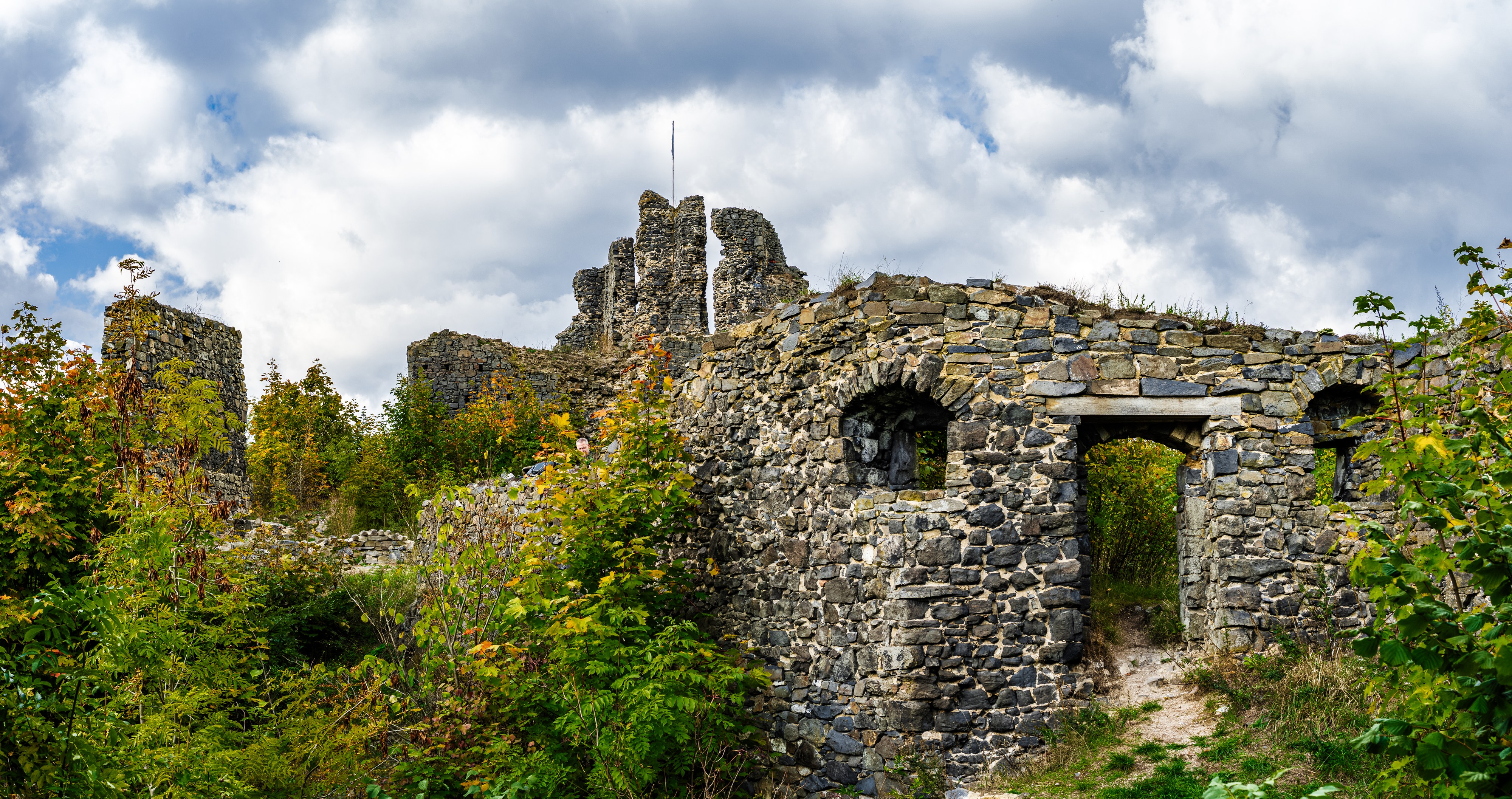
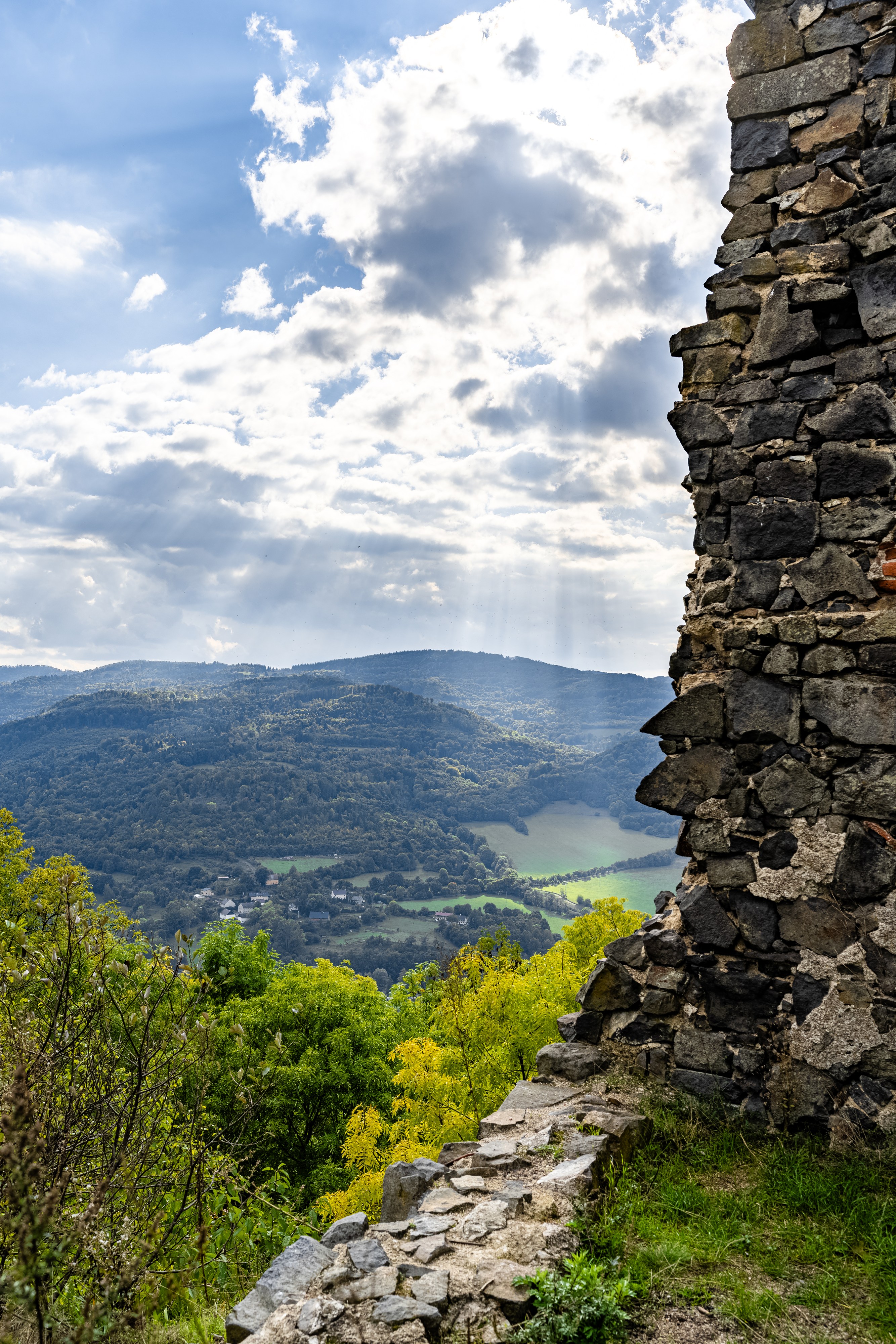
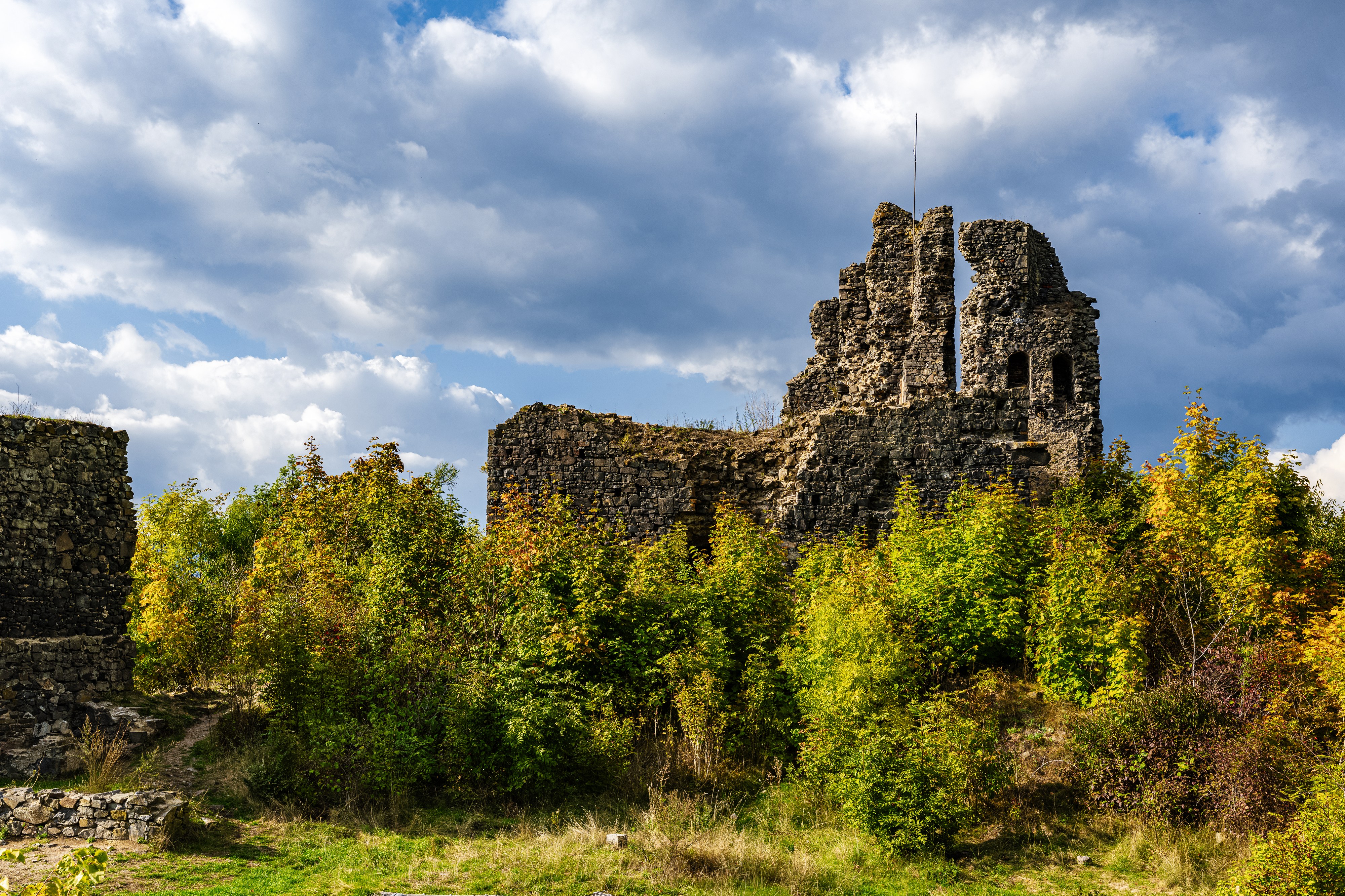
From the old farmstead, the path continued uphill through the forest until we finally reached Šumburk. The castle was built between 1431 and 1435 as a new residence for the Lords of Schönburg. Following a fire in the 16th century, it was abandoned and gradually fell into ruin.
A surprising amount of the structure remains. Towers, window openings and overgrown walls are scattered across the hilltop. The surrounding trees were already beginning to show their autumn colours while dark clouds moved across the landscape.
For a brief moment, the sun broke through the cloud cover. Beams of light descended like bright pillars across the wooded hills and the valley below. Framed by the dark castle walls, the scene appeared almost unreal – rather like a landscape from The Lord of the Rings.
We did not encounter another visitor here either. Hasištejn, Egerberk and Šumburk could hardly have been more different: a closed and surprisingly well-maintained castle, a silent ruin with expansive views and, finally, an atmospheric hilltop fortress above an abandoned farmstead, complete with an ancient oak and a private steak restaurant.
Having all these places almost entirely to ourselves was, of course, rather pleasant. At the same time, it is remarkable how few people seem to visit such impressive sites. They are missing out.