On the evening of 12 August 2026, the Moon moved in front of the Sun, as most people will probably know by now. In my home region, the eclipse remained partial, with 86% of the Sun obscured – spectacular enough to turn it into a small family event in our field 😂
We used two telescopes:
- an Acuter 40/400 H-alpha telescope with a ZWO ASI533 MC Pro camera and a Baader Hyperion 2.25× Barlow lens for imaging
- and a William Optics Zenithstar II ED with a solar filter and Baader Hyperion zoom eyepiece for visual observation.
Plus plenty of folding chairs and eclipse glasses.
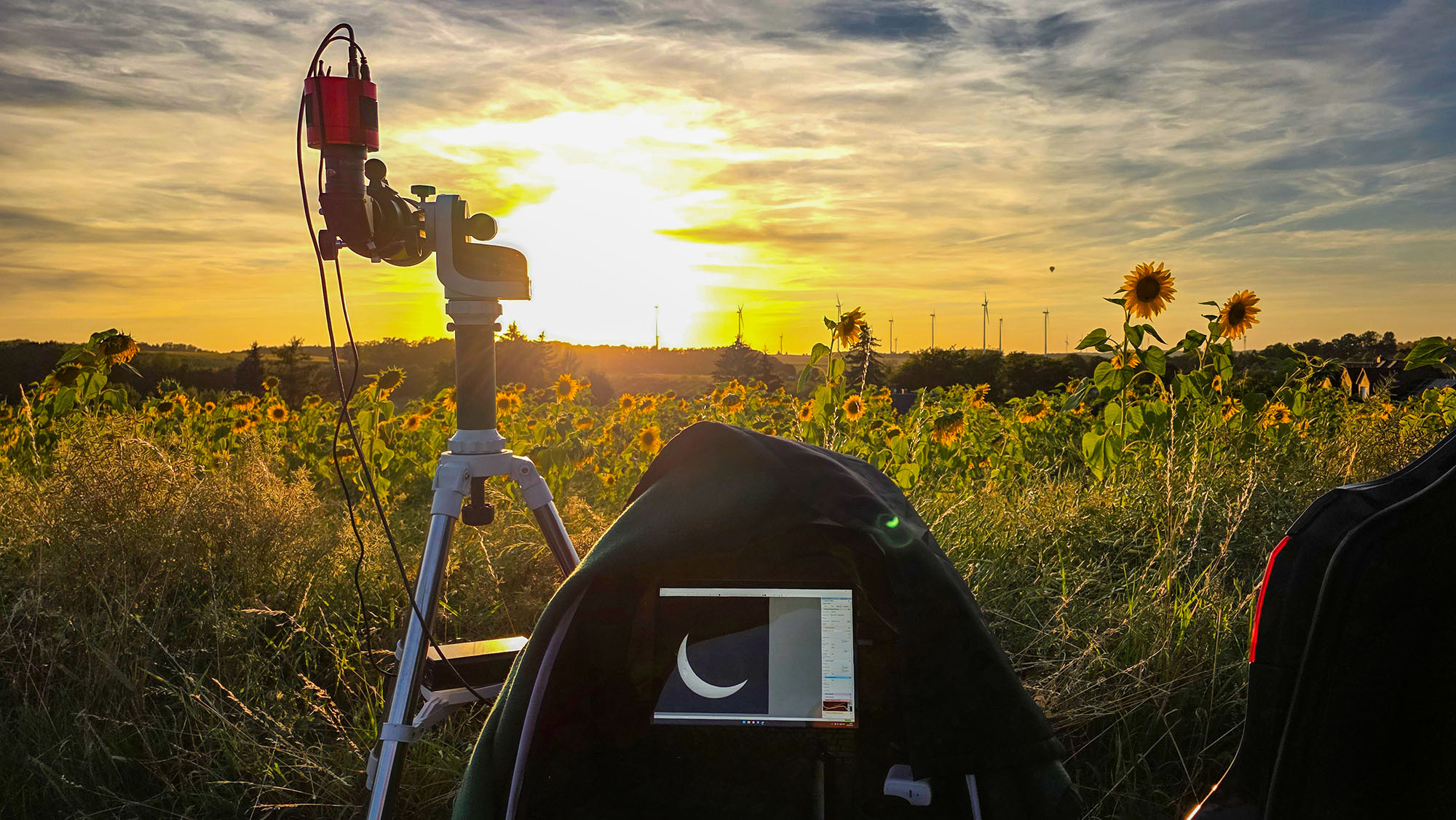
Imaging setup. Note the lens flare in the lower right, complete with a tiny crescent Sun
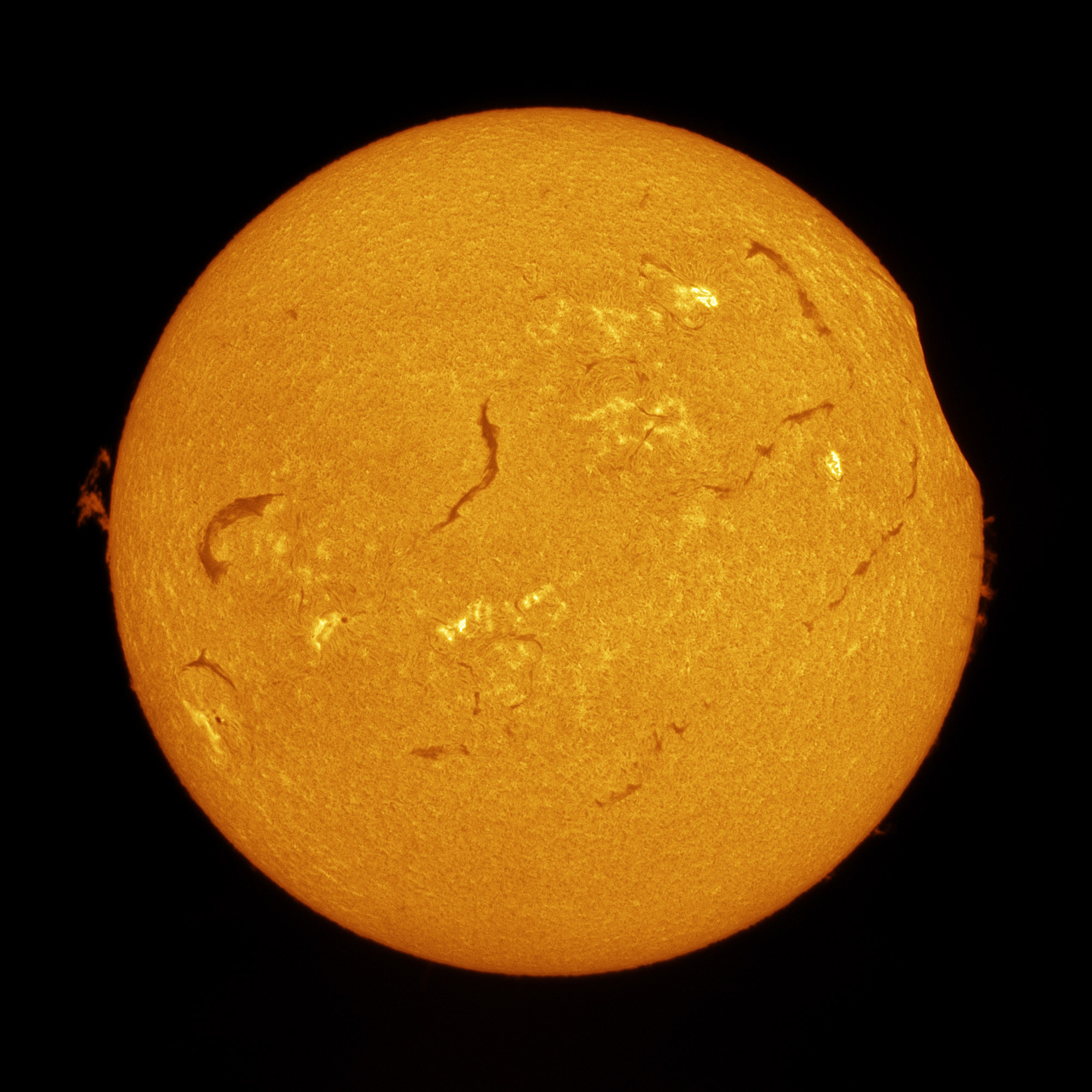
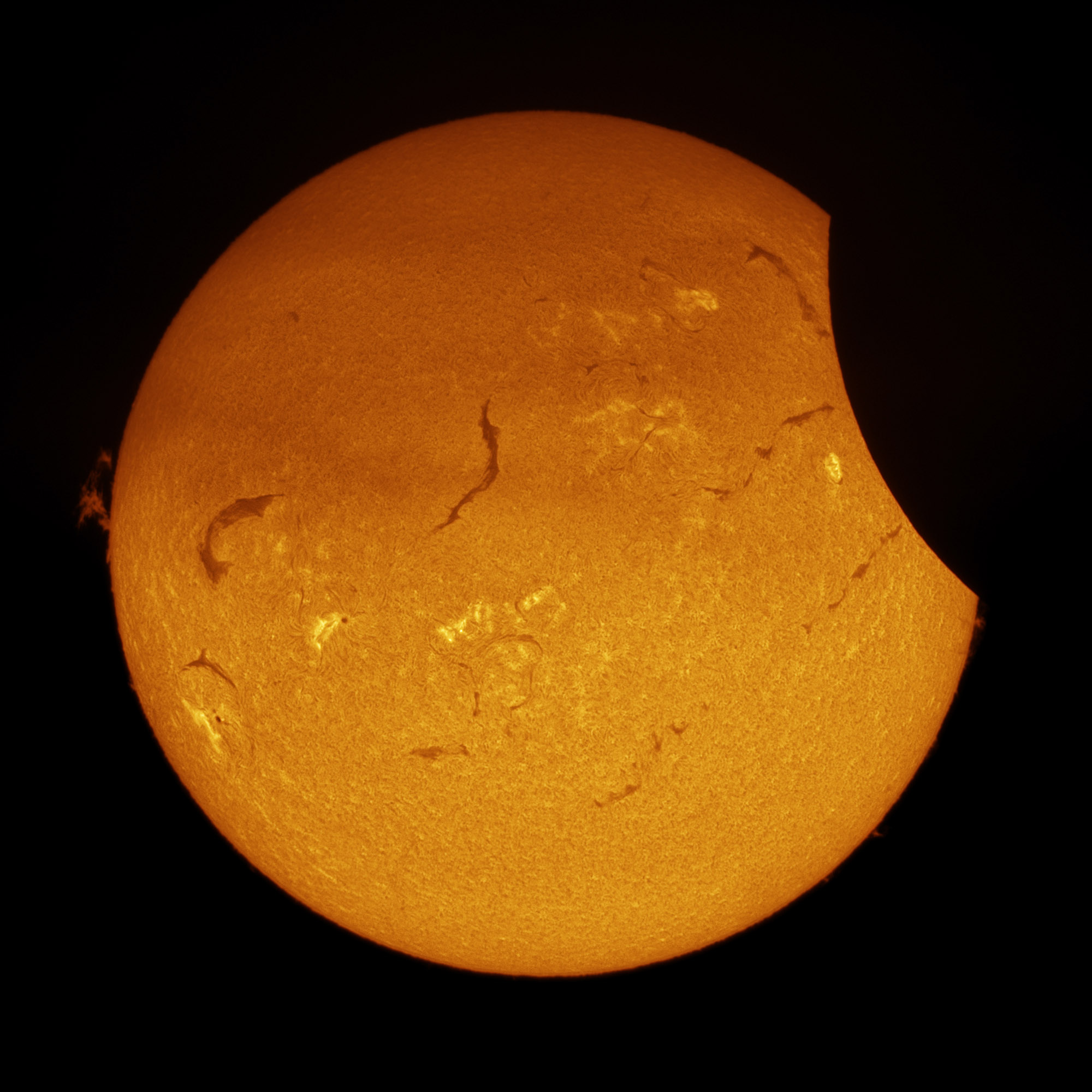
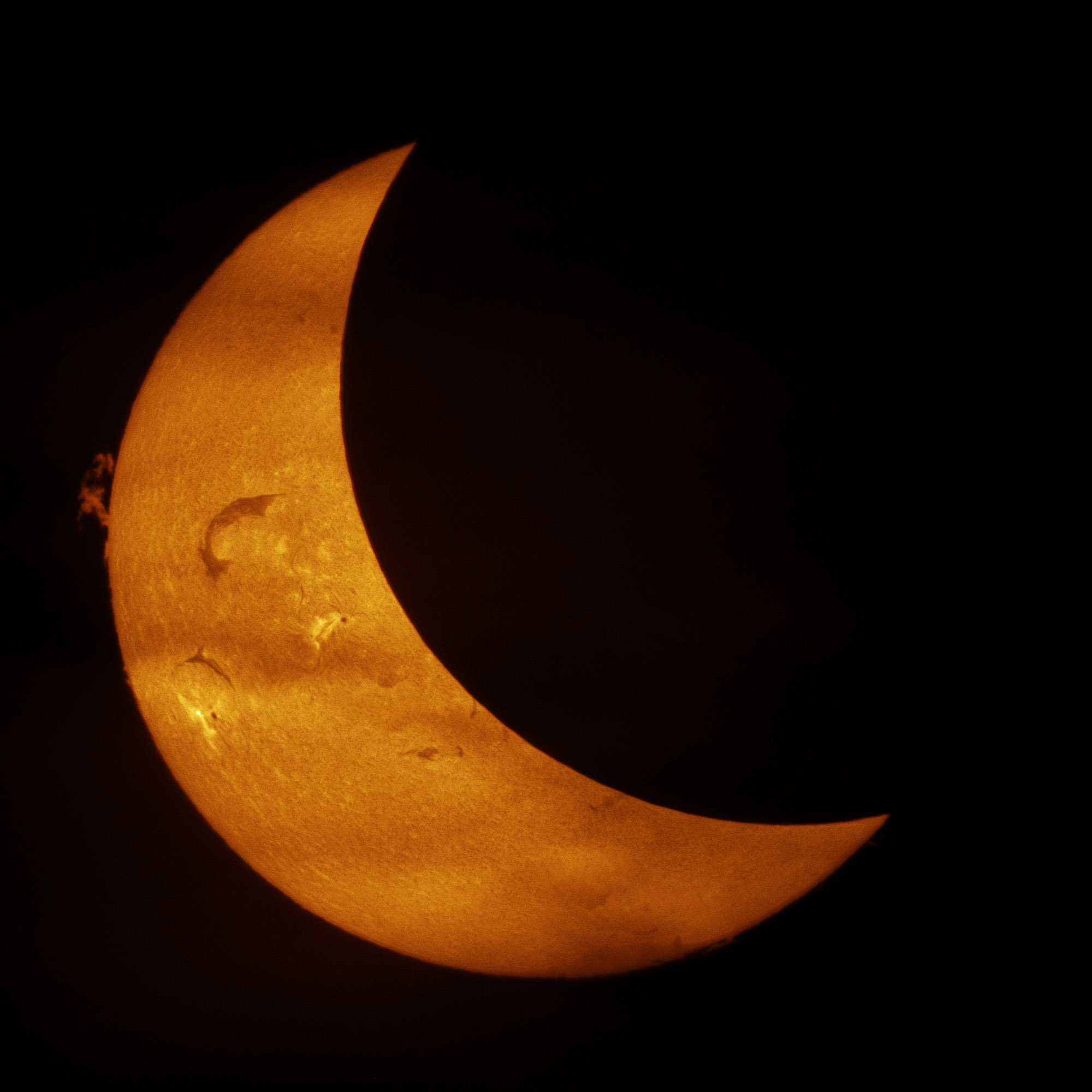
Naturally, clouds moved in at exactly the wrong moment, during the eclipse itself. Nevertheless, we were lucky enough – and I captured enough signal – to observe this spectacular event. For the recording, I used SharpCap Pro and created a small sequence that captured one frame every second, plus a short burst at 20 frames per second every five minutes. The individual frames were used to create a time-lapse, while the best bursts were processed into still images using lucky imaging. Here are the four best bursts. Unfortunately, the clouds introduced a little haze into some of them.
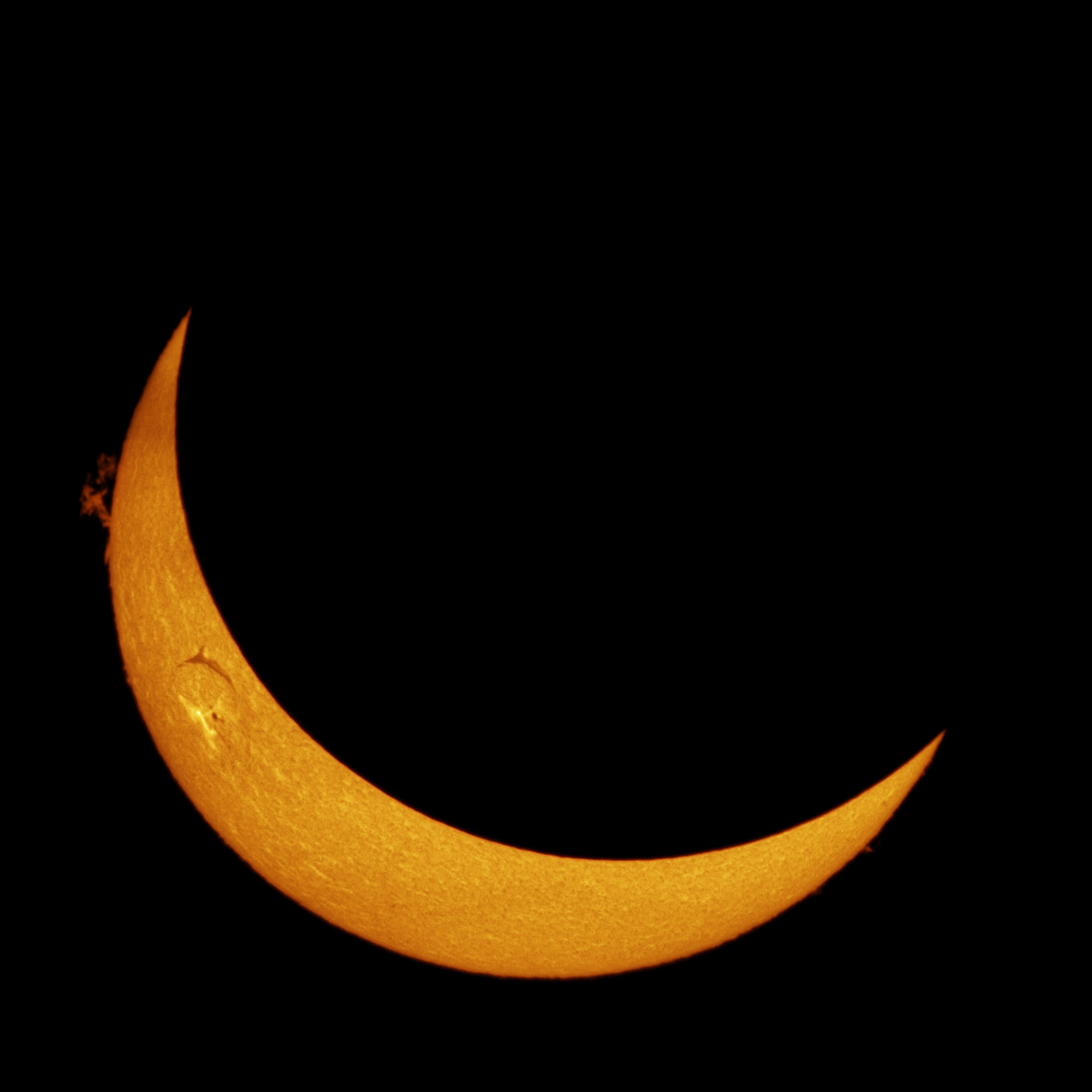
And here is the time-lapse video, created from 4,700 individual frames. I processed the frames using PIPP for debayering, followed by ImPPG to align the Sun (with mixed success due to the numerous clouds) and then applied the finishing touches with SolarToolbox in PixInsight. Unfortunately, the video shakes quite a bit because the clouds forced me to guide the mount manually, which also made things difficult for ImPPG.
Although the clouds somewhat obscured the view, it was a wonderful evening with the whole family, as well as the interested neighbours and passers-by who joined us out of curiosity.